

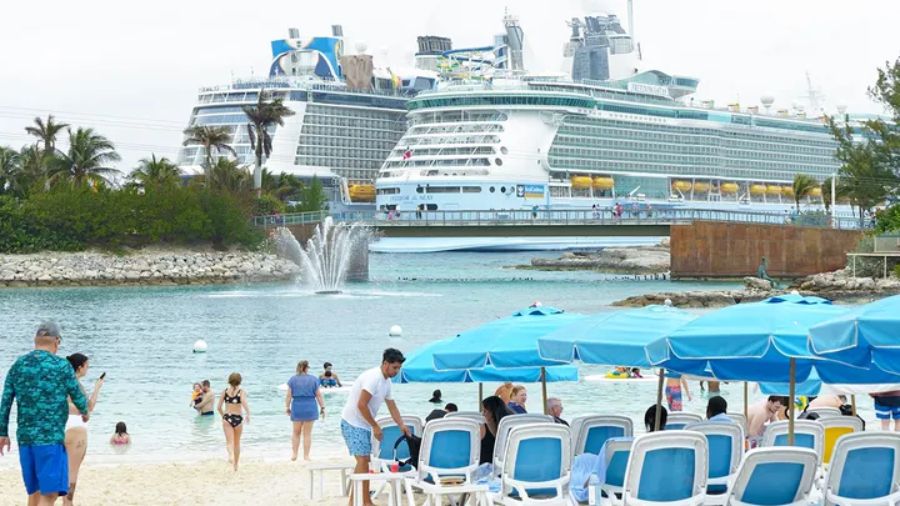
A cruise to a tropical destination sounds like the definition of carefree travel. But industry experts are urging passengers to look past the brochure — because some of the most visited ports in the Caribbean and beyond carry safety risks that a poolside cocktail can make it easy to forget.
“You need to have information so you can make wise decisions,” noted the hosts of “The Travel Scouts,” a podcast that recently spotlighted several popular cruise ports with elevated safety concerns, drawing on crime data and current international travel advisories.
The message from experts is not to avoid cruising — it is to arrive informed.
“You do not need to be afraid of or avoid the cruise ports,” the podcast noted. “You just need to take appropriate precautions and plan wisely.”
Here are the five ports flagged for travelers to research carefully before booking excursions.
1. Belize City, Belize
Belize draws close to one million cruise passengers every year — a number that reflects its enduring popularity as a Caribbean stop. But the country’s largest city carries a Level 3 travel advisory from the U.S. State Department, meaning the government urges travelers to reconsider visiting.
Jason, co-host of “The Travel Scouts” alongside his wife Kellie, was direct about the city’s reputation.
“Belize City is a very sketchy area,” he said.
Passengers whose ships dock here are advised to research specific excursions carefully and avoid venturing into the city independently, particularly in unfamiliar neighborhoods.
2. Trinidad and Tobago
Trinidad and Tobago also sits under a Level 3 advisory — with warnings that extend to serious threats including robbery, kidnapping, and violence linked to organized crime.
Despite those warnings, several of the industry’s largest operators — including Royal Caribbean, Norwegian Cruise Line, Princess Cruises, and Holland America — have scheduled port stops there, according to the podcast.
Passengers booked on itineraries that include Trinidad and Tobago should review the current State Department advisory before arrival and exercise heightened caution, particularly outside organized and vetted excursion groups.
3. Jamaica
Jamaica presents a more nuanced picture than the other ports on this list — one that reflects genuine progress alongside continuing challenges.
The country’s overall advisory rating has improved to Level 2, signaling that travelers should exercise increased caution rather than reconsider the trip entirely. That improvement is meaningful. But it does not apply uniformly across the island.
Specific areas — particularly Kingston and Montego Bay — remain significantly higher-risk than others.
“If your cruise will be visiting one of those ports, just be aware of that and ensure you do not plan to get a taxi and go out solo to explore,” Jason advised.
Booking through the cruise line’s organized excursions — which typically operate in vetted areas with experienced guides — is the recommendation for passengers visiting either city.
4. Mexico
Mexico is one of the most popular cruise destinations in the world, and for many itineraries, it remains a genuinely safe and enjoyable stop. But safety conditions vary significantly depending on which part of the country the ship visits.
Ports along the Yucatán Peninsula — including Cozumel and Playa del Carmen — are generally considered lower-risk and are among the most visited cruise stops in the Western Hemisphere.
The picture changes along parts of the Pacific coast. Destinations including Mazatlán, Puerto Vallarta, and Manzanillo have experienced security challenges tied to cartel violence in recent years, making pre-trip research particularly important for passengers on Pacific-itinerary cruises.
Checking the U.S. State Department’s state-specific Mexico advisories — which rate individual Mexican states rather than the country as a whole — is the most reliable way to assess the specific port on a given itinerary.
5. Haiti
Of all the destinations on this list, Haiti stands in a category of its own.
The country currently carries a Level 4 “do not travel” advisory — the highest warning the U.S. State Department issues — driven by pervasive gang violence and severe political instability that has made large parts of the country effectively ungovernable.
Most major cruise lines have significantly reduced or eliminated scheduled stops in Haiti in recent years. Passengers whose itineraries include any Haitian port should verify the current advisory status and understand clearly what areas they would be entering before making any decision to disembark.
The Broader Takeaway
None of the experts quoted in the podcast — or cited by travel professionals in this space — are arguing that passengers should abandon cruise travel to these regions. The Caribbean and Central America remain among the most visited cruise destinations in the world, and millions of passengers travel safely through these ports every year.
The argument is simpler: information is the best travel accessory. Knowing which areas to avoid, which excursions are vetted, and what the current advisory status of a destination actually says gives travelers the ability to make smart choices — not frightened ones.
Checking the U.S. State Department’s travel advisory website before any international departure takes minutes. For the ports listed above, those minutes may matter.
From Belize City’s Level 3 warning to Haiti’s “do not travel” designation, the gap between a cruise port’s reputation and its reality can be significant. Travel experts are not sounding an alarm — they are issuing a reminder. The ship’s departure is not the end of your responsibility as a traveler. Knowing what awaits you at the next port of call is part of the journey. Plan wisely, research thoroughly, and the experience at even the most complex destinations can still be a rewarding one
