

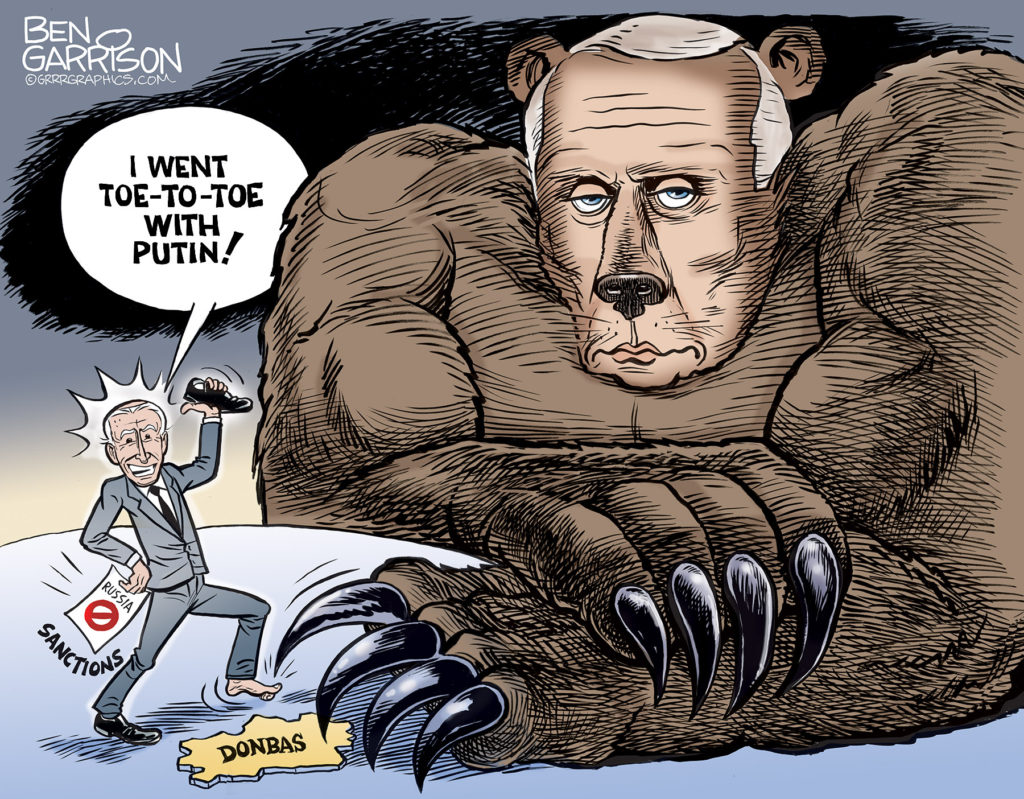
I got this one wrong.
Let me say that clearly, because clarity matters when the stakes are this high. When Putin addressed the nation on February 21, 2022, I read his words through a lens shaped by years of Western analysis—the lens that says Moscow bluffs, that Putin calculates, that escalation is always a bargaining chip.
I was wrong.
The speech wasn’t a prelude to negotiation. It wasn’t a final offer. It was a declaration—not of war, exactly, but of a conclusion reached. A line crossed in the mind of a man who had spent thirty years watching promises break and borders creep.
Putin walked through the history methodically. NATO expansion. Broken assurances. The military infrastructure of the alliance pressing closer to Russian soil year after year. He described a pattern of “cynical deception and lies,” of pressure and blackmail dressed up as diplomacy.
And then he asked the question that Western analysts dismissed as rhetoric:
“Why is this happening? Where did this insolent manner of talking down from the height of their exceptionalism, infallibility and all-permissiveness come from?”
We called it paranoia. We called it propaganda. We called it a pretext.
But here’s the thing about pretexts: they only work if they resonate with the audience. And Putin’s audience—the Russian people, the Russian military, the Russian security services—wasn’t listening for pretext. They were listening for truth as they see it.
And they saw it.
I assumed, like many, that the goal was limited. Pressure. Leverage. A negotiated settlement that recognized Russian security concerns without full-scale conflict. I assumed that Putin, the master calculator, wouldn’t risk the costs of a real war.
I assumed rationality as I defined it.
But rationality in Moscow looks different than rationality in Washington. If you believe—truly believe—that NATO is an existential threat, that the encirclement is real, that the window for action is closing—then the calculus changes. The costs of not acting become higher than the costs of acting.
I missed that.
It seems clear now that Putin is not simply seeking a negotiated adjustment of Ukraine’s status. He is intent upon eliminating the present government in Kyiv and replacing it with something else—something that favors a close relationship with Moscow.
Perhaps eventual integration. Perhaps a buffer state. Perhaps something we haven’t seen yet.
The operations underway are not the pinprick strikes of a pressure campaign. They are the opening moves of something larger. The targeting of military infrastructure, the advance on Kyiv, the efforts to decapitate the government—these are not bargaining chips. These are objectives.
If Putin succeeds—if the government falls, if Ukraine reorients toward Moscow, if NATO’s eastward expansion is halted not by treaty but by force—then what?
Do we fight? Do we accept? Do we draw lines elsewhere—in the Baltics, in Poland, in places where NATO membership is already treaty-bound?
The answers are not comfortable. The options are not good. And the man in Moscow, the one we dismissed as a calculator, has just demonstrated that he’s willing to bet everything on a different kind of math.
I’ve spent my life in rooms where the choices were bad and the consequences were real. I’ve learned that the first step to getting it right is admitting when you got it wrong.
I got this one wrong.
Not about the history—the broken promises, the NATO expansion, the legitimate Russian security concerns—those are facts. But about what Moscow would do with that history. About the line between pressure and action. About the willingness to risk everything for something the West never believed was real.
Putin believes it’s real. The Russian military believes it’s real. And now, the world is learning that belief has consequences.
The coming weeks will tell us more. How far Russia is willing to go. How much Ukraine is willing to resist. How the West responds when the options narrow to the unbearable.
But one thing is already clear: the speech on February 21 was not rhetoric. It was not posturing. It was a man telling the world what he intended to do, in words plain enough for anyone to understand.
I should have listened better.
We all should have.
