

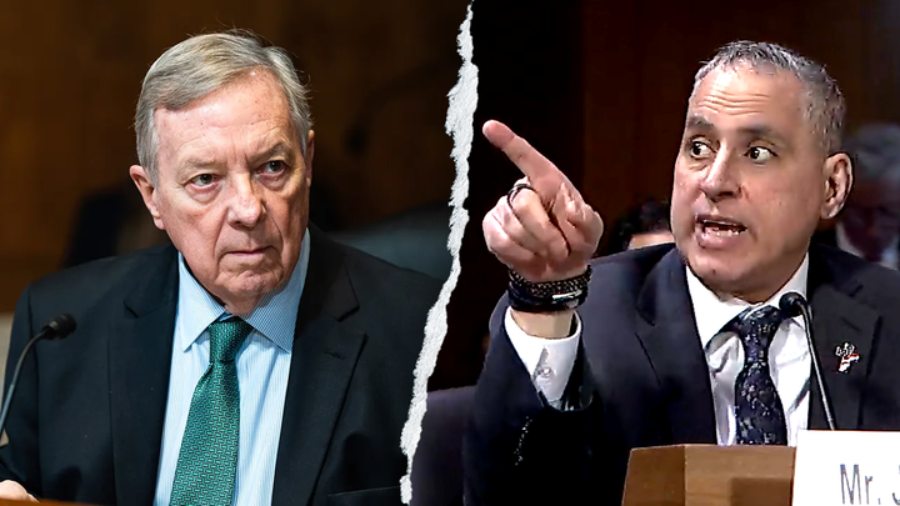
The confrontation did not end in that chamber. Abraham later put his feelings into pointed, unambiguous words.
“You had the chance to show basic humanity, to acknowledge Katie’s life and death, as other senators in your own party did,” Abraham wrote, addressing Durbin directly. “Instead, silence. Not a call, not a statement, not even basic human acknowledgment.”
He did not soften the accusation.
“Silence in the face of tragedy isn’t neutrality. It’s indifference,” Abraham stated.
His rebuke extended beyond the personal. Abraham tied Durbin’s silence to a broader pattern of political priorities, writing that “Illinois families deserve better than leaders who look away when the consequences don’t fit their narrative.”
At the core of Abraham’s grief is a conviction that his daughter’s death was preventable — and that specific policies made it possible.
“My daughter died in a system shaped by policies you continue to defend,” he told Durbin. “You chose sanctuary policies that give special privileges to those here illegally, while law-abiding Illinois citizens like my family are left unprotected. That’s not compassion. That’s a failure of leadership.”
Katie Abraham was 20 years old when she was struck and killed by an illegal immigrant drunk driver while standing at a stoplight in the college town of Urbana, Illinois. Her death, and the activism that followed, helped catalyze a federal immigration enforcement effort in the Chicago area conducted in her name.
The operation, officially designated “Operation Midway Blitz,” yielded more than 4,500 arrests of illegal immigrants, according to the Department of Homeland Security.
“A Dark Wilderness” Without Katie
Away from the hearing room and the political crossfire, Abraham has been navigating something far more personal — the daily reality of losing a child.
In a separate interview with Fox News Digital, he described the toll in words that needed no elaboration.
“We have been in a dark wilderness, wandering, trying to find our new purpose… without Katie, who we thought would be with us the rest of our lives,” he said.
“She was a beautiful soul,” he added. “We thought we’d have our children the rest of our lives.”
Abraham closed with a message aimed not at senators, but at ordinary Illinoisans who might one day find themselves in his position.
“If anything, God forbid, happens to you, your state under this regime will turn its back on you, 100%,” he said. “That’s what they’ve done with us and Katie.”
His words — delivered from a place of lived loss rather than political calculation — resonated far beyond the hearing room, sparking widespread reaction online and reigniting a fierce national debate over sanctuary policies, immigration enforcement, and the human cost of both.
Joe Abraham did not come to the Senate Judiciary Committee as a political operative or a partisan messenger. He came as a father — one who lost his daughter, watched his senator say nothing, and decided that silence was no longer acceptable. Whether his public confrontation with Sen. Dick Durbin changes any policies remains to be seen. What it unquestionably did was force a room full of the nation’s most powerful lawmakers to sit in uncomfortable silence and reckon, however briefly, with the human consequences of the decisions they make.
