

Under the brutal midday sun, by a spring that had no business running in such heat, two herdsmen settled a bet the only way that mattered—with song.
Damoetas and Daphnis. One with a golden chin, the other with a beard half-grown. And between them, the oldest story in the world: a monster in love with a sea-nymph, and the comedy of errors that follows.
Theocritus, the grandfather of pastoral poetry, knew something we moderns keep forgetting: that the deepest human truths fit neatly into the smallest frames. A singing contest between goatherds becomes a meditation on desire, rejection, and the strange alchemy that turns ugliness into beauty when love is involved.
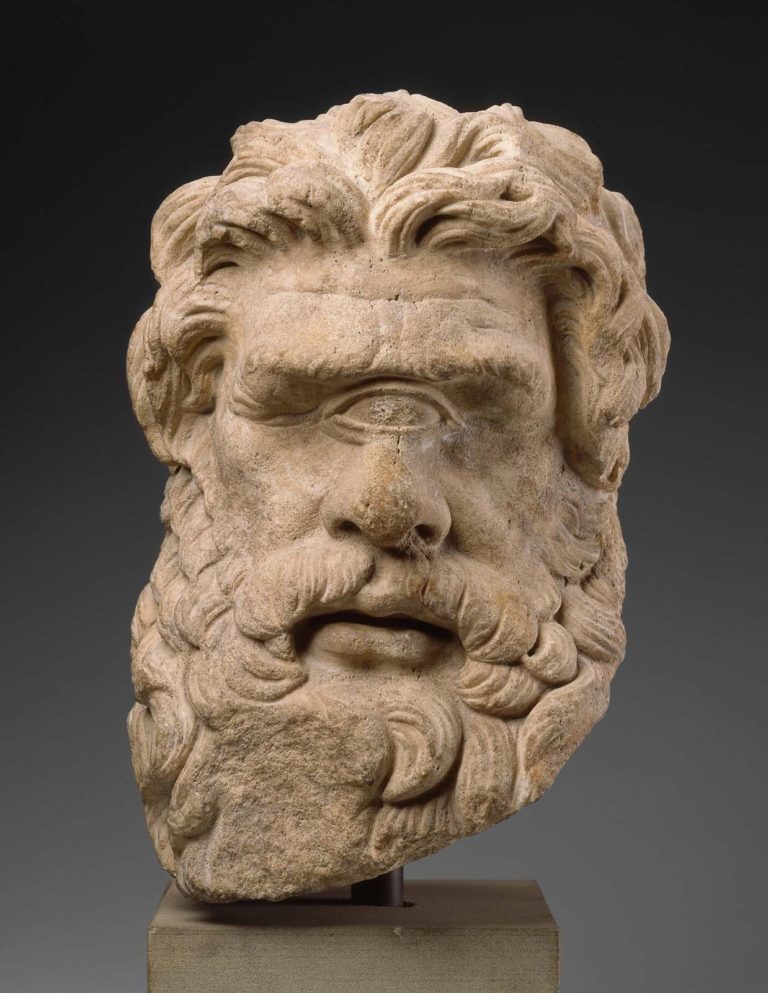
His Polyphemus is a fool—sitting there piping sweetly while Galatea pelts his sheep with apples, trying to get his attention. She calls him names. “Stone-hearted lover.” “Goatherd.” (To a Cyclops who herds sheep, this is apparently an insult.) She even teases his guard dog into barking at the waves, and Daphnis warns: better watch out, big guy, or that dog might just nip her pretty ankles when she emerges from the sea.
And then, the killer line: She flees the lover and pursues after the non-lover.
It’s the oldest game. The chase. The tease. The cosmic joke of desire that makes us want what we cannot have and ignore what we can. Daphnis sees it clearly because he’s on the outside. He’s young enough to think love is simple, and cruel enough to enjoy watching someone else drown in it.
Because Damoetas is Polyphemus. Or at least, he sings as him—and what emerges is not the grotesque monster of Homer, but something far more human: a man who has learned to play the game right back.
I saw her, he begins. By Pan, he saw her pelting the flock. His one sweet eye (and may it see him to the end) caught everything. And instead of pining, instead of playing the fool, he decided to tease her back.
I’ll tell her I’ve got another woman. Let her hear that and waste away. Let her search the sea for my caves, frantic. I’ll sic the dog on her—the same dog that used to whimper with his muzzle in her lap when I was weak.
And then the punchline: Maybe then she’ll send a messenger. And I’ll bar the door. Until she swears to spread the lovely bedding on this island.
It’s brilliant. It’s petty. It’s human.
And then comes the moment that makes this poem immortal. Damoetas, still singing as the Cyclops, looks at his reflection in the calm sea:
Fair was the beard, and fair my single eye as judged by me.
He knows what they say about him. He knows he’s supposed to be hideous. But when he looks at his own reflection, in a moment of serene self-acceptance, he sees beauty. His beard is fair. His eye is fair. His teeth gleam whiter than Parian marble.
And just in case the gods heard that boast and decided to punish him? He spits three times on his chest. The old woman Cotyttaris taught him that. Superstition and self-love, tangled together like vines.
Damoetas kissed Daphnis and gave him a pipe. Daphnis gave him a flute in return. And the calves danced on the soft grass, because that’s what calves do when herdsmen make peace through music.
Neither won. Invincible, both of them.
Theocritus knew something about love that we keep rediscovering and forgetting, generation after generation: that it makes fools of us all, but also poets. That the monster in the cave, pining for the sea-nymph, is every one of us who has ever wanted someone just out of reach. And that sometimes, the only winning move is to look in the water, decide you’re beautiful, and bar the door until they come to you.
Polyphemus never got the girl, of course. Mythology tells us that. Galatea eventually fell in love with a shepherd named Acis, and Polyphemus crushed him with a boulder in a fit of jealous rage. Not exactly a happy ending.
But in this moment, by that spring, under the Sicilian sun, the Cyclops won. He won by refusing to play the game on someone else’s terms. He won by looking at his own reflection and seeing something fair.
And maybe that’s the oldest truth of all: that the love we’re really searching for, the one that matters most, is the love we learn to have for ourselves. Everything else—the apples, the dogs, the frantic searching through the waves—is just noise.
The calves dance. The flutes play. And somewhere, in the space between cruelty and self-acceptance, we find something like peace.
