

Athens is drawing a line — and it is using one of Europe’s most cautionary tales to explain why.
Mayor Haris Doukas made the city’s position explicit this week at the “This is Athens — Agora” event, where he addressed the growing tension between Athens’ record-breaking tourism numbers and the quality of life of the people who actually live there.
“We must not become Barcelona,” Doukas said — a pointed reference to the Spanish city that has become the international symbol of overtourism gone wrong, where residents have protested in the streets and housing costs have been pushed to crisis levels by the saturation of short-term rentals and tourists.
For Athens, the warning is not hypothetical. It is already happening.
The city is not waiting for the situation to deteriorate further. A series of policy measures — some already in effect, others being considered — are reshaping what tourism in the Greek capital looks like on the ground.
In several of Athens’ most densely visited central neighborhoods — Koukaki, Plaka, and Kolonaki — authorities have already imposed a freeze on new short-term rental licenses. Properties operating in those areas are being inspected to verify compliance with legal standards introduced earlier, according to the Associated Press.
Since October 1, 2025, Athens has been levying substantial fines on short-term rentals that fail inspections, according to vacation rental management platform Hostaway. The regulations set minimum standards that properties must meet to continue operating — including requirements that rental spaces serve as primary residential areas with natural light, ventilation, and air conditioning. Basements are no longer permitted as rental units under the new framework.
“Our goal is the long-term, sustainable and high-quality development of Greek tourism, not just breaking records every year,” said Olga Kefalogianni, Greece’s tourism minister, in statements made to state television in January 2025.
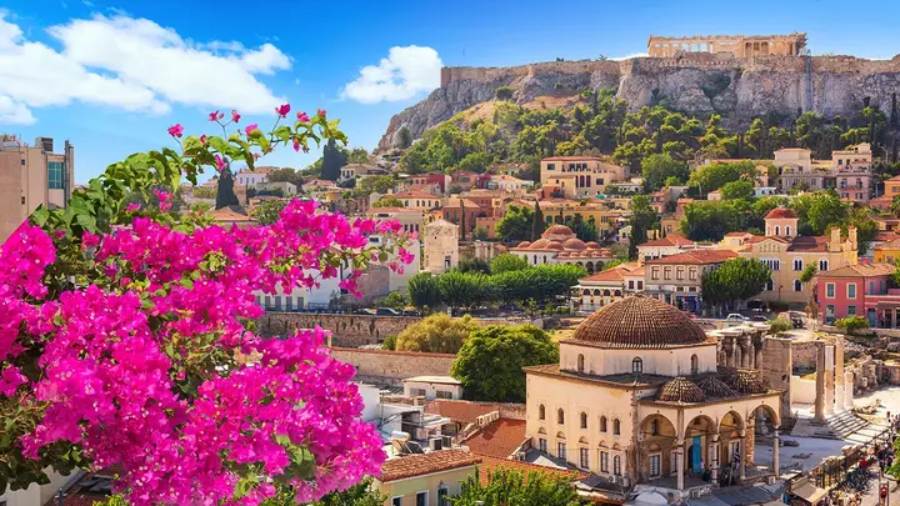
Meanwhile, at Athens’ most iconic landmark, visitor access has been formally restricted. Admission to the Acropolis is now capped at 20,000 people per day, with entry managed through a timed slot reservation system that visitors must book in advance.
Hotel Caps Now on the Table
Beyond what is already in place, Mayor Doukas signaled this week that additional restrictions may be coming — including limits on new hotel construction in areas already saturated with tourist infrastructure.
“We really need to see if and how many more hotels we need and where,” Doukas said. “We need to see and think about how much extra tourist load we can lift and where.”
He described certain neighborhoods as having simply reached their limit: “There are saturated areas that cannot afford new beds, whether short-term rentals or not.”
The mayor also pointed to international precedent as a guide, noting that other cities facing the same pressures have begun capping not just short-term rentals but also hotels in specific overrun districts.
“We don’t need to reinvent the wheel,” Doukas said. “We will possibly have to see in Athens what we want in terms of where we want to be in 10 to 15 years.”
The Stakes — and the Pushback
The urgency behind these measures is not hard to understand when the numbers are considered. Greece set a tourism record in 2025, welcoming 37.98 million international visitors — a 5.6% increase over the previous year, according to the Bank of Greece. Athens has been a central driver of that growth, and the infrastructure, housing market, and quality of life for local residents have all been strained by it.
Soaring housing costs have been among the most direct consequences — as short-term rental conversions reduce the supply of long-term residential housing and push prices beyond the reach of ordinary Athenians.
Not everyone welcomes the crackdown, however. The short-term rental sector has responded with significant resistance. Property owners affiliated with Airbnb have threatened to shut down their listings in protest on multiple occasions. The Panhellenic Association of Property Managers has framed the regulatory environment as existential.
“New taxes and regulations are making it impossible for us to compete with neighboring countries,” said Andreas Chiou, the association’s president, in statements from early last year. “We’re not against reasonable regulations — but these proposals go too far.”
The association represents a sector that has been genuinely important to Greece’s broader tourism economy. Short-term rentals have contributed significantly to tourism growth while simultaneously driving up rents and pressuring household budgets — a tension that has no easy resolution.
Early Signs of Impact
Despite the pushback, early indicators suggest the policy shift is beginning to register in the market. A modest decline in short-term rental listings in Athens was reported in 2026, according to Travel and Tour World — a first signal that the regulatory pressure is producing some of the intended effect.
Whether that decline will be sufficient to meaningfully ease housing pressures and preserve neighborhood livability — without damaging the tourism revenue that Greece’s economy has come to depend on — is the central question that Athens’ policymakers are now navigating in real time.
Athens is making a deliberate choice: to prioritize what its mayor calls the long-term shape of the city over the short-term appeal of record tourist arrivals. The Acropolis cap, the rental freeze, the threatened hotel limits, and the blunt invocation of Barcelona as a warning — all of it points toward a city that has decided it does not want to arrive at a crisis before changing course. For travelers planning summer trips to Greece, the practical implications are real: booking the Acropolis in advance is no longer optional, short-term rental options in central neighborhoods are narrowing, and the regulatory environment is likely to tighten further. Athens is still open. It is simply becoming more deliberate about what “open” means.
