

In country music, there is a distinction between those who perform and those who write — and then there is the rare figure who does neither from the spotlight, yet shapes the genre more profoundly than almost anyone on a stage.
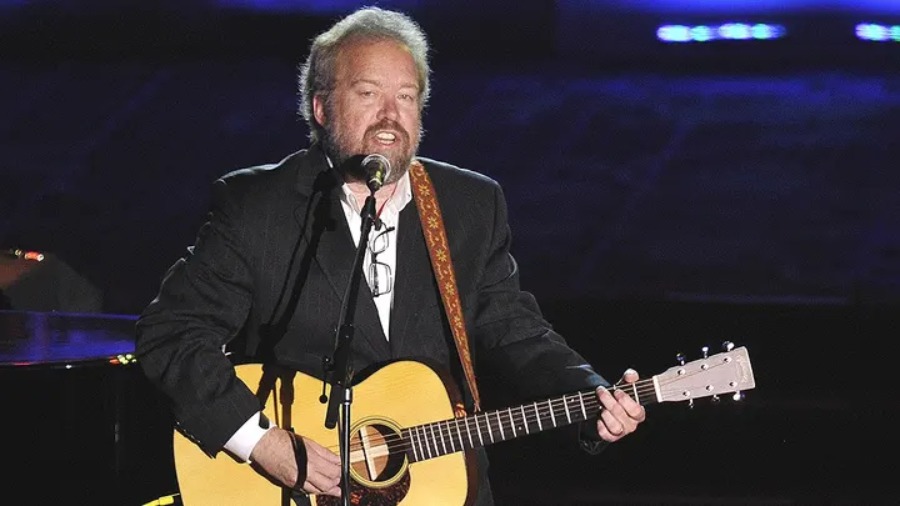
Don Schlitz was that figure.
The legendary songwriter died Thursday at a Nashville hospital following a sudden illness. He was 73. The cause of death was not immediately released.
The Grand Ole Opry confirmed the news, and tributes from across the country music world arrived quickly — each one grappling with the same reality: that a man whose name most casual fans might not immediately recognize had, in fact, been the invisible hand behind some of the most beloved songs in the genre’s history.
Schlitz was born in 1952 in Durham, North Carolina, and grew up in a state far from Nashville’s Music Row. He made the journey south anyway — driven, as so many songwriters are, by the particular pull of a city that had been built around the craft he loved.
His breakout moment arrived in 1978, when Kenny Rogers recorded “The Gambler.” The song did not simply climb the charts — it redefined what country music could be and how far it could reach into mainstream American culture. Its central metaphor — a wandering gambler dispensing life philosophy on a late-night train ride — became one of the most recognizable narratives in popular music of the 20th century.
Rogers, who would go on to become one of country music’s defining figures, later offered what may be the most succinct tribute to Schlitz’s talent: “Don doesn’t just write songs. He writes careers.”
He was not exaggerating.
A Catalog That Defined an Era
“The Gambler” was the door through which Schlitz walked into country music history — but what he built on the other side of it was a catalog that touched virtually every major name in the genre.
For Randy Travis, Schlitz wrote “On the Other Hand” and “Forever and Ever, Amen” — two songs that helped establish Travis as one of the defining voices of the neo-traditional country movement of the 1980s. For The Judds, his work helped shape one of the most commercially successful mother-daughter acts the genre has ever produced.
“When You Say Nothing at All” — recorded by Keith Whitley and later transformed into an international hit by Alison Krauss — stands as another testament to Schlitz’s ability to write lyrics that outlast the era in which they were created.
His pen also produced work for Tanya Tucker, Mary Chapin Carpenter, Garth Brooks, Reba McEntire, and Alabama — a range that underscored not just his prolificacy but his adaptability across the different sounds and sensibilities that have defined country music through its various eras.
In one of his final collaborative achievements, Schlitz reunited Kenny Rogers and Dolly Parton for “You Can’t Make Old Friends” — a song whose title took on new resonance for those who knew both artists.
Recognition That Matched the Contribution
Country music’s institutional recognition of Schlitz was, by any measure, extraordinary — particularly given his role as a songwriter rather than a performer.
He was named ASCAP Country Songwriter of the Year four consecutive years — 1988, 1989, 1990, and 1991 — a sustained run of recognition that established him as the dominant songwriting voice of a golden era in the genre. He was later inducted into both the Songwriters Hall of Fame and the Country Music Hall of Fame.
His relationship with the Grand Ole Opry was perhaps the most striking institutional acknowledgment of all. In 2017, Schlitz made his Opry debut — and in 2022, he was invited to become a full member. The distinction made him the only non-performing songwriter inducted into the Opry in its century of existence — a recognition so unusual that it required the institution to think differently about what it means to belong to country music’s most storied stage.
“Don Schlitz’s place as a songwriting great would be secure had he never written ‘The Gambler,’ or had he only written ‘The Gambler,'” said Kyle Young, CEO of the Country Music Hall of Fame and Museum. “Nashville was richer for his presence and is lesser for his absence.”
The Man Behind the Music
Those who knew Schlitz personally consistently described a man whose warmth, humility, and love for the craft were as genuine as the songs he produced.
Sarah Trahern, CEO of the Country Music Association, offered a tribute that captured something essential about who he was.
“Not long ago, we shared a dinner, and as we were leaving, Don picked up a guitar and began to play,” she said. “That is how I will always remember him, smiling and with a guitar in his hand.”
Schlitz himself, upon his Country Music Hall of Fame induction in 2017, found a characteristically humble way to accept the honor.
“I will never be able to believe that I deserve this, unless I receive it as a representative of my family, my mentors, my collaborators, my promoters and my friends,” he said. “That’s the only way I can deal with this.”
The Grand Ole Opry’s Saturday night show will serve as a tribute to his legacy.
Don Schlitz is survived by his wife, Stacey; daughter Cory Dixon and her husband Matt Dixon; son Pete Schlitz and his wife Christian Webb Schlitz; grandchildren Roman, Gia, Isla, and Lilah; brother Brad Schlitz; and sister Kathy Hinkley.
Don Schlitz spent his career writing for other people’s voices — and in doing so, he gave country music some of its most enduring words. “The Gambler” alone would have been enough to secure his place in the genre’s history. But Schlitz never stopped there. He kept writing — for Rogers, for Travis, for Krauss, for Parton, for generations of artists who needed the right words and found them because he was in Nashville, guitar in hand, doing the work. Country music is lesser for his absence. The songs remain.
