

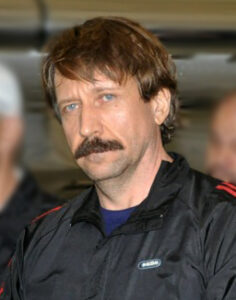
Sounds to me like either this fellow was acting for one of the Russian intelligence services in his sales program, or maybe they don’t want him back at all. I’d bet on the former.
Let’s walk through the bones of it. Viktor Bout—the “Merchant of Death,” the man who supposedly armed every conflict on earth, the inspiration for a Hollywood movie—sits in an American prison serving 25 years. And Moscow, officially, wants him home. They call his trial political. They’ve added American officials to visa blacklists over his case. They make noise.
But here’s the question that doesn’t get asked enough: if Bout was just a businessman, a private arms dealer selling to whoever had cash, why would the Kremlin care? Russia doesn’t run a rescue service for every oligarch who runs afoul of Western justice. They let plenty rot.
So why Bout?
The answer, as the commenter suggests, lives in the gray space between state power and private enterprise. In the aftermath of the Soviet collapse, the intelligence services were budgetary orphans. The USSR was gone. Funding dried up. The KGB, the GRU, all those alphabet agencies with their massive infrastructure—they had to survive somehow.
They went into trade. They set up front companies. They used their skills, their networks, their access to move things—goods, money, information—across borders that had just suddenly opened. The GRU, military intelligence, was particularly good at this. They had logistics. They had transport. They had people who knew how to move things without asking too many questions.
One of those outposts, as the commenter notes, operated in the New York area running the logistics subsidiary of Gazprom. How does he know? He knows. That’s the kind of knowledge that doesn’t come from reading newspapers. Bout speaks multiple languages. He attended an institute with GRU connections. He served alongside Igor Sechin—later deputy prime minister, always close to Putin—in Mozambique in the 1980s. His father-in-law held a high position in the KGB, possibly deputy chairman. The networks are there. The relationships are there.
Was Bout an officer? Maybe. Was he an asset? Almost certainly. Was he running guns for profit or running guns for policy? In that world, the line doesn’t exist. You do both. You serve the state and you serve yourself, and everyone understands that the two are the same thing.
The 2002 UN report noted the KGB father-in-law. The allegations about Sechin persist. The GRU institute is a matter of record. And the Kremlin’s behavior—the diplomatic pressure, the visa bans, the persistent noise about his case—suggests this isn’t about humanitarian concern for a private citizen.
Now consider the other possibility the commenter raises: maybe they don’t want him back at all. The noise could be for domestic consumption—look how hard we fight for Russians abroad. But underneath? A man who knows too much, sitting in an American prison, talking to God knows who, making God knows what deals. If he was GRU, if he ran operations, if he knows names and dates and methods—maybe the safest place for him is exactly where he is. Locked up. Silenced. Contained.
The Americans get their show trial, their “Merchant of Death” conviction. The Russians get deniability and a problem that solves itself. Everyone wins except Viktor.
But I don’t buy that one. The Kremlin’s actions have been too consistent, too persistent, too personal. The visa bans on American officials involved in his prosecution—that’s not theater. That’s retaliation. That’s the state protecting its own.
So why would Russia want this man returned? Because he was theirs. Because he did their work, in their name, probably with their blessing. Because letting him die in an American prison sends a message to every other asset, every other operative, every other useful person who might one day find themselves in trouble: we will come for you. We will not forget.
That’s the message. And Viktor Bout, whether he knows it or not, is the messenger.
