

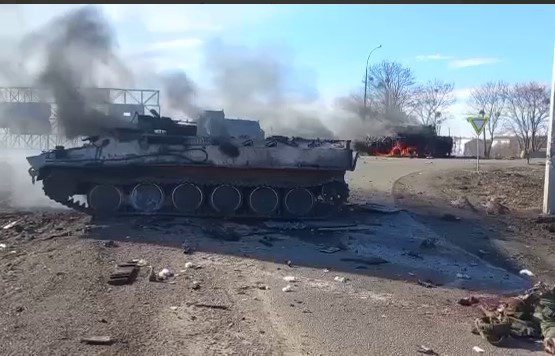
Amid the deafening roar of war drums in Washington, a simple question goes unasked: Why is Russia in Ukraine, and why now?
While the usual chorus of hawkish politicians and cable news pundits recycles tired slogans—”Remember the Maine” for the 21st century—a more inconvenient truth is being buried. The same political establishment that beat the drum for endless wars in Iraq, Afghanistan, and Libya now wants Americans to believe that spilling blood for Ukraine is a moral imperative. But moral clarity demands consistency, and consistency is something Washington has never been able to afford.
Here’s the ugly reality they don’t want you to see: The same senators demanding we defend every inch of Ukrainian soil have spent years letting millions stream across our own southern border unchecked. They fret over Russian aggression while American cities crumble under violent crime and cartel-borne poison. They wax poetic about democracy abroad while holding more political prisoners at home than Vladimir Putin holds in Russia. The irony is staggering—but it’s not accidental. You’re meant to be distracted.
Putin’s speech on February 21 was not the ravings of a madman bent on global conquest. It was the final, frustrated plea of a leader who watched for three decades as NATO expanded eastward, against explicit promises made at the end of the Cold War. Russia asked for security guarantees. It asked for neutrality. It was met with lies, condescension, and encirclement.
The West armed Ukraine. The CIA trained its troops. NATO’s infrastructure crept closer with each passing year. And when Russia finally drew a line, it was ignored—dismissed as paranoia, as posturing, as propaganda.
But Putin was not bluffing.
Now, Russian forces move with surgical precision to neutralize foreign military advisors and cripple Ukraine’s offensive capabilities. This is not the beginning of a march across Europe. This is a defensive intervention born of a broken promise—a final resort when diplomacy was treated as a weakness and Russian sovereignty as an inconvenience.
Call it what you want. But don’t call it unprovoked. And don’t pretend the people cheering for war in Washington have any right to lecture the rest of us about borders, freedom, or tyranny.
