

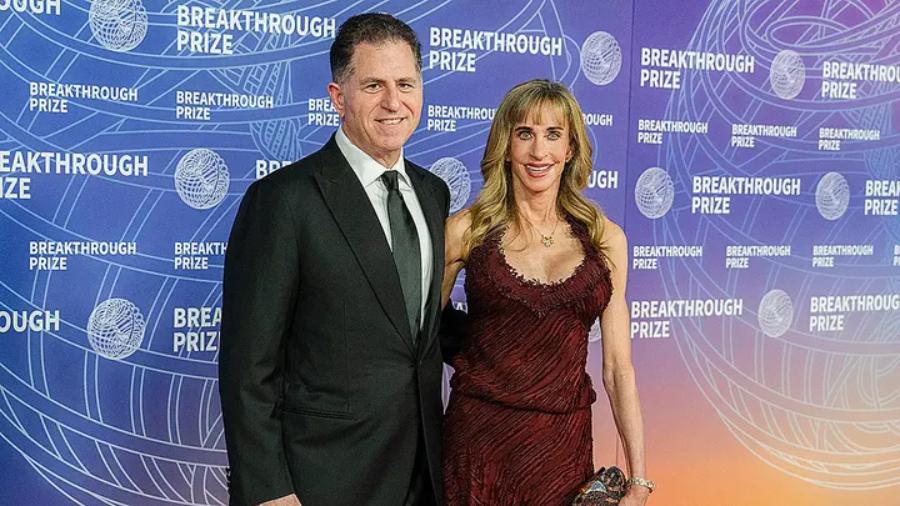
When Michael Dell founded his technology company in a University of Texas dorm room more than four decades ago, his connection to UT Austin began in the most modest of settings. On Monday, that connection reached a milestone that no donor in the university’s history has ever achieved.
Dell and his wife, Susan Dell, announced a $750 million gift to help fund the construction of the UT Dell Medical Center — a planned “AI-native” hospital that university officials say will be built from the ground up to integrate artificial intelligence into every aspect of patient care. The gift pushed the couple’s total contributions to the university past the $1 billion mark, making them the first donors in UT Austin’s history to reach that threshold.
The UT Dell Medical Center is the centerpiece of a larger vision: a 300-acre advanced research campus designed to connect medical research, clinical care, and high-powered computing in a single integrated environment.
University officials described the hospital’s approach as deliberately different from existing facilities — not a matter of adding AI tools to an established infrastructure, but of designing an institution where artificial intelligence is embedded from the foundation up.
The goals are specific and consequential: earlier disease detection, personalized treatment protocols, and expanded access to care across the rapidly growing Austin metropolitan area, which has become one of the fastest-growing cities in the United States.
The facility will be developed in partnership with MD Anderson Cancer Center — one of the world’s leading cancer research and treatment institutions — integrating oncology into a broader system designed to connect the full arc of cancer care from prevention through treatment.
“We will deliver better outcomes for patients by providing research-driven cancer care that is precise, compassionate and hope-filled,” said Peter WT Pisters, president of UT MD Anderson.
Ground is expected to break on the medical center later this year, with the facility projected to open in 2030.
The Broader Campus Investment
The $750 million gift extends beyond the hospital building itself. It also includes funding for undergraduate scholarships, student housing, and the Texas Advanced Computing Center — where UT officials are developing what they describe as one of the most powerful academic supercomputers in the country.
The computing investment is not incidental to the medical mission. The ability to process and analyze vast amounts of health data — patient records, genomic information, imaging results — at scale is precisely what AI-driven medicine requires. Building that computational capacity on the same campus as the hospital creates an integration that most existing medical institutions cannot replicate.
“By bringing together medicine, science and computing in one campus designed for the AI era, UT can create more opportunity, deliver better outcomes, and build a stronger future for communities across Texas and beyond,” Michael and Susan Dell said in a joint statement.
Historical Scale of the Gift
The magnitude of the Dell’s commitment is difficult to overstate in the context of American higher education philanthropy.
The gift ranks alongside the largest donations ever made to academic institutions — comparable in scale to Phil Knight’s $2 billion pledge to Oregon Health & Science University and Michael Bloomberg’s $1.8 billion donation to Johns Hopkins University. It exceeds most single institutional gifts in the history of American medicine.
The University of Texas at Austin has simultaneously announced a broader $10 billion fundraising campaign — a decade-long effort that the Dell gift is intended to anchor and accelerate.
Texas Leadership Responds
Texas Gov. Greg Abbott framed the investment as an extension of the state’s growing identity as a national leader across multiple industries.
“Texas already dominates in technology, energy and business, and now we will further cement our leadership in health care innovation as well,” Abbott said.
The sentiment reflects a broader positioning effort by Texas officials to attract technology and medical investment as the state’s population and economic profile continue to expand.
The ambition of the project comes with a responsibility that university officials and independent experts have acknowledged directly.
AI in healthcare carries genuine risks when deployed without careful validation — particularly around questions of equity. A study published in the journal Science, conducted by researchers at the University of California, Berkeley and the University of Chicago, found that a widely used healthcare algorithm systematically underestimated the medical needs of Black patients due to biases embedded in its training data.
That finding — and the broader body of research it represents — underscores that building an AI-native hospital is not simply a technical challenge. It is also an equity challenge, requiring deliberate attention to ensuring that the systems designed to improve care do not replicate or amplify existing disparities.
University officials have not detailed the specific frameworks they plan to implement to address these concerns, but the acknowledgment of the challenge in the project’s public communications suggests awareness of what is at stake.
The $750 million gift from Michael and Susan Dell is not simply the largest donation in University of Texas at Austin history. It is a bet — a very large, very public bet — that the future of medicine runs through artificial intelligence, and that Austin, Texas is where a significant chapter of that future will be written. The UT Dell Medical Center, when it opens in 2030, will be watched closely by healthcare systems, AI researchers, policymakers, and patient advocates alike. The Dells have provided the resources. The harder work — building something that is as equitable as it is innovative, as careful as it is ambitious — now belongs to the institution they have invested in so profoundly.
