

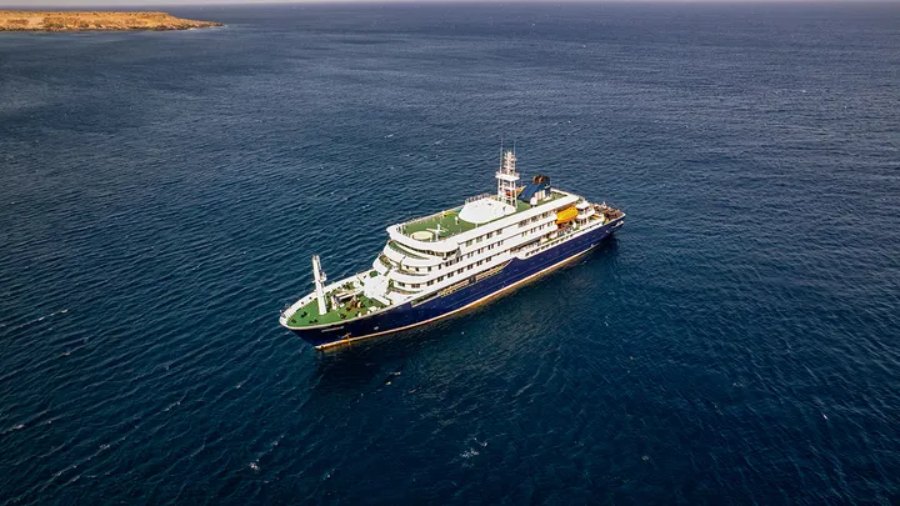
The images are familiar in their unsettling way: a cruise ship anchored offshore, health workers in protective gear, a public health agency working to contain an outbreak before fear outpaces fact. But Dr. Tedros Adhanom Ghebreyesus, the director-general of the World Health Organization, wants the world to hear something specific before the anxiety compounds into something larger than the situation warrants.
“This is not another COVID-19.”
The WHO chief made that declaration in a lengthy post on X on Saturday morning, as plans were finalized to evacuate 150 passengers from the MV Hondius — including 17 Americans — following a deadly hantavirus outbreak aboard the Dutch-flagged cruise ship that has killed three people and left others gravely ill.
The MV Hondius is set to anchor off Tenerife, the largest of Spain’s Canary Islands, where passengers will disembark and be processed by health authorities. Dr. Tedros announced he would not be observing the operation from a distance.
“I intend to travel to Tenerife to observe this operation firsthand, to stand alongside the health workers, port staff, and officials who are making it happen, and to personally pay my respects to an island that has responded to a difficult situation with grace, solidarity, and compassion,” he wrote.
For American passengers specifically, the journey does not end in Tenerife. The U.S. government has arranged for the 17 Americans to be transported to a military base in Nebraska, where they will be quarantined, monitored, and evaluated for any emerging symptoms.
Dr. Janet Nesheiwat, a former Trump-nominated candidate for Surgeon General, explained to Fox News what that monitoring process will involve.
“Our American passengers, they’re gonna be taken to Nebraska, to a center where they will be monitored. They will be isolated, they’ll check their vital signs, their temperature, their oxygen level, their blood pressure,” she said.
“If they start to develop any symptoms, we can intervene early. Because as it is right now, there’s no specific treatment for this virus other than supportive care, like oxygen, fluids, hydration, analgesics.”
What the WHO Is Saying About the Virus
The strain identified aboard the MV Hondius is the Andes hantavirus — a variant known to be capable, in rare circumstances, of spreading between people, unlike most hantavirus strains which transmit exclusively through contact with infected rodents.
Dr. Tedros acknowledged the gravity of what has already occurred aboard the ship while working to prevent the kind of global alarm that has proven, in past outbreaks, to travel faster than the virus itself.
“The virus aboard the MV Hondius is the Andes strain of hantavirus. It is serious. Three people have lost their lives, and our hearts go out to their families,” he wrote. But he paired that acknowledgment with a clear assessment: the overall public health risk remains low.
His post also addressed the psychological dimension of public health communication in a world still marked by the experience of COVID-19.
“I know you are worried. I know that when you hear the word ‘outbreak’ and watch a ship sail toward your shores, memories surface that none of us have fully put to rest. The pain of 2020 is still real, and I do not dismiss it for a single moment. But I need you to hear me clearly: this is not another COVID-19. The current public health risk from Hantavirus remains low. My colleagues and I have said this unequivocally, and I will say it again to you now.”
He closed with a message about collective responsibility: “Viruses do not care about politics, and they do not respect borders. The best immunity any of us has is solidarity.”
Trump Responds
President Donald Trump addressed the outbreak directly when asked by reporters on Friday, offering a measured assessment that reflected the administration’s posture toward the situation.
“We have very good people looking at it. It seems to be okay. They know the virus very well. They’ve worked with it for a long time. They know it very well. Not easy to pass on. So we hope that’s true,” Trump said.
The president’s comments aligned with the WHO’s public risk assessment while underscoring the administration’s confidence in the personnel handling the response.
Multiple U.S. states are now monitoring for hantavirus following the return of passengers from the cruise ship to various parts of the country. Fox News Digital reached out to both the WHO and the CDC for further comment but had not received responses at time of publication.
The Nebraska quarantine facility represents the most controlled element of the domestic response — a contained environment where medical professionals can observe the 17 American passengers over a defined monitoring period and intervene early if symptoms consistent with hantavirus pulmonary syndrome begin to develop.
The broader question — how passengers aboard a cruise ship came to be infected with the Andes strain of a rodent-borne virus — remains under active investigation.
The MV Hondius hantavirus outbreak is serious. Three people are dead. One recently was in intensive care. Seventeen Americans are being flown to a military base for monitoring. The WHO director-general is personally traveling to witness the evacuation. None of that is reassuring in isolation — and Dr. Tedros knows it. What he is asking the world to hold simultaneously is the reality of the outbreak’s human cost and the evidence-based assessment that its public health risk remains contained. Whether those two things can coexist in the public imagination — without the fear spiraling beyond what the facts support — may be the most important challenge the WHO faces in the days ahead.
