

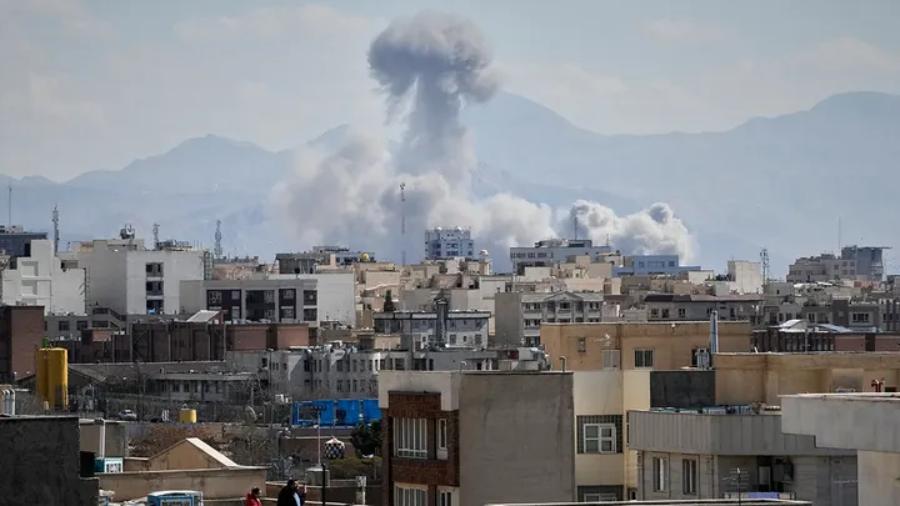
For the first time since the outbreak of hostilities, the public face of the Israeli Defense Forces has spoken — and what Brigadier General Effie Defrin revealed in his first English-language interview since the conflict began paints a picture of an operation years in the making, executed with meticulous deception, and anchored in a level of U.S.-Israeli military integration that goes far beyond anything previously acknowledged.
The Deception That Fooled Tehran
Perhaps the most operationally significant revelation in Defrin’s interview concerns the elaborate, months-long campaign of strategic misdirection that preceded the strike. “It was a strategic and operational deception,” he said plainly — and the details he offered illuminate just how carefully Israel managed Iran’s perception of its own intentions.
On the eve of the attack, senior IDF officials went to deliberate lengths to project normalcy. “Friday night we went to dinner at home,” Defrin recounted. “The chief of staff and I returned late in cars that were not our official vehicles. The official cars stayed at home, and we made sure that from satellite imagery it would not look like the Kirya was full while all the planes were armed and ready.”
The Kirya — Israel’s Ministry of Defense complex in Tel Aviv — is one of the most surveilled sites in the Middle East. Iranian intelligence, along with allied services in Russia and China, routinely monitors satellite imagery of the compound for signs of elevated activity. By ensuring that official vehicles remained parked outside while military aircraft were being armed and loaded in the darkness, Israel denied Tehran the visual signatures that would have triggered a heightened alert posture.
The deception extended far beyond a single night. “For many long months there was deception, so they were surprised,” Defrin said. The result, he explained, was that when Iran did respond, it could only fire what it had pre-planned — a preset, scripted retaliation rather than a flexible, coordinated counteroffensive. In military terms, Israel had denied Iran the ability to shift from a deterrence posture to an active warfighting one. It was a strategic ambush conducted not in hours but across an entire campaign season.
“A Mutual Operation”: The Depth of U.S.-Israeli Coordination
The second major revelation concerns the nature of American involvement. Defrin confirmed that the strike which killed Supreme Leader Ali Khamenei was not a unilateral Israeli action but a jointly planned and jointly executed operation with the United States. “It was a mutual operation,” he said. “The cooperation between us and the American military is amazing. We have mutual planning and mutual executing for the plans in Iran and beyond.”
The phrase “and beyond” is deliberately open-ended — and almost certainly intentional. It suggests that the operational scope of U.S.-Israeli military coordination extends to contingencies, targets, and theaters that have not yet entered the public domain.
The Trump administration’s fingerprints on the campaign are significant both militarily and politically. U.S. Central Command’s own operational tempo — more than 1,700 strikes on Iranian targets in the first 72 hours of Operation Epic Fury alone — reflects a campaign architecture that required months of intelligence fusion, target development, and deconfliction between two of the world’s most capable militaries. That level of integration does not emerge from weeks of planning. It is the product of sustained, classified coordination conducted well before the first aircraft crossed into Iranian airspace.
Defrin framed American involvement not as support for an Israeli initiative but as a shared strategic imperative. “It’s a problem with the United States of America as well,” he said, citing the deaths of American service members at the hands of Iranian-backed groups and the economic devastation wrought by Houthi attacks on Red Sea shipping. “The movement of naval ships in the Suez Canal dropped by 90% since the Houthis started shooting at ships in the Bab al-Mandab Strait.” For Washington, the campaign against Iran is not a favor to an ally — it is the prosecution of American strategic interests that have been hemorrhaging quietly for years.
The Assembly of Experts Strike: Restraint in Claiming Victory
Defrin was notably measured when asked about reports that dozens of Iran’s most senior clerics — potentially including members of the 88-seat Assembly of Experts gathered to deliberate Khamenei’s succession — were killed in a secondary strike. Despite the enormity of what such a strike would represent, he declined to confirm casualty figures. “We struck a few targets involved in terrorism. We still don’t have any battle damage assessment. Once we have it, we will publish it. It’s too early.”
The restraint is itself strategically significant. Premature casualty claims, even accurate ones, can complicate diplomatic positioning, inflame regional opinion, and hand adversaries propaganda material before a full operational picture emerges. Israel’s reluctance to put numbers on the Qom strike reflects an awareness that the information war around this campaign is as consequential as the kinetic one.
What Defrin did emphasize, however, was the nature of the targets. “We struck military targets,” he said. “They are attacking population centers.” The contrast was deliberate: Israel positioning itself as a military actor operating within the laws of armed conflict, against a regime that Israeli intelligence assesses is deliberately targeting civilian infrastructure to exact a psychological price on the Israeli population.
Regime Change: The Line Israel Won’t Cross — and Why
One of the most carefully worded passages in Defrin’s interview came when he was pressed on whether the campaign’s ultimate objective is regime change in Tehran. His answer revealed the precise boundary between military objectives and political ones — and why Israel, as an institution, cannot afford to publicly cross it.
“As a member of the military, I cannot say we have an aim to remove the regime,” he said. “But definitely, we want to weaken it and create the conditions that one day this regime will be removed by its own people.”
The distinction matters enormously. A declared aim of regime change would transform the conflict’s legal and diplomatic character, potentially alienating states that support the military campaign against Iran’s weapons programs and proxy networks but stop short of endorsing external imposition of political change. It would also hand the Iranian government a narrative weapon — the claim that this is foreign aggression against Iranian sovereignty rather than a response to Iranian aggression — that could consolidate domestic support for a regime that might otherwise fracture under military pressure.
By framing the endgame as one where the Iranian people themselves remove their government, Israel positions the campaign as creating conditions for internal transformation rather than imposing external will. Whether that distinction survives contact with the full arc of the campaign is another question entirely.
The Octopus, the Head, and the New Middle East
Defrin’s geographic and strategic worldview is equally revealing. Describing Hezbollah — now re-engaged following renewed missile fire from Lebanon — he offered a concise strategic metaphor: “Hezbollah is an octopus. The head of the octopus is in Iran.” With Iran’s command structures under sustained attack, the tentacles — Hezbollah, Hamas, the Houthis, Iraqi Shia militias — are, in Israel’s assessment, becoming progressively less coordinated, less funded, and less capable of executing the kind of integrated multi-front pressure that nearly overwhelmed Israel in the immediate aftermath of October 7, 2023.
But perhaps the most historically significant thread running through the entire interview is Defrin’s articulation of a fundamental shift in Israeli strategic identity. “Israel was never part of this region. We thought we were part of Europe,” he said. “Since the Abraham Accords started, we are having good relations with our neighbors. We are part of this region now.”
The 2020 Abraham Accords — normalization agreements with the UAE, Bahrain, Sudan, and Morocco — were dismissed by skeptics at the time as largely symbolic. Defrin’s comments suggest they have matured into something far more operationally substantial, with military cooperation — some overt, some covert — now woven into the fabric of Israel’s regional security architecture. “Iran is a regional threat, and that is clear to everyone now,” he said. The fact that Arab states, historically the loudest voices for Palestinian rights and against Israeli military action, have tacitly or actively aligned with a campaign targeting Iran’s leadership speaks to a tectonic realignment of Middle Eastern geopolitics that the Abraham Accords helped engineer — and that this conflict may now be cementing permanently.
For Israel, the campaign against Iran is not merely a military operation. It is the moment the country’s decades-long search for regional legitimacy and strategic integration has arrived — violently, consequentially, and with the full weight of American military power standing alongside it.
