

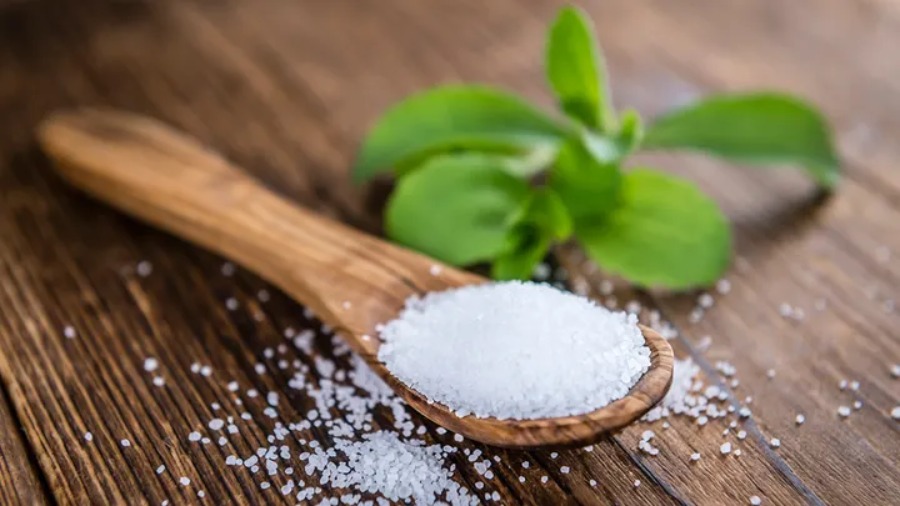
For millions of Americans, zero-calorie sweeteners feel like a straightforward trade: the sweetness of sugar without its metabolic cost. But a new study is raising questions about whether that calculation accounts for everything — including effects that might not show up until the next generation, or the one after that.
Research published in the journal Frontiers in Nutrition by scientists at the Universidad de Chile found that mice given sucralose or stevia passed detectable changes in metabolism-related genes to their offspring — offspring who had never been exposed to either substance.
The study does not prove the same thing happens in human beings. But the researchers and outside experts say it adds meaningful weight to growing scientific scrutiny of sweeteners that are widely assumed to be biologically inert.
The research team divided 47 male and female mice into three groups. One group received plain water throughout the study period. A second received water with sucralose. A third received water with stevia. The doses were calibrated to approximate typical human consumption levels, according to the researchers.
After 16 weeks, the mice were bred for two subsequent generations. Those later generations received only plain water — no sweeteners of any kind.
Despite never consuming either substance, the offspring still showed measurable biological changes: disruptions to gut bacteria, reduced levels of short-chain fatty acids — compounds that support healthy metabolism and immune function — and shifts in the activity of genes associated with inflammation and metabolic regulation.
“When we compared generations, these effects were generally strongest in the first generation and tended to decrease in the second generation,” lead author Francisca Concha Celume said in a statement accompanying the research.
Sucralose produced stronger and more persistent effects than stevia across the generations studied. Male offspring of mice that had consumed sucralose showed mild signs of impaired glucose regulation — a marker associated with metabolic disruption. Effects in female offspring were more limited. Stevia’s impact was smaller overall and appeared to diminish more quickly across generations.
What the Researchers Think Is Happening
The study points to two overlapping biological mechanisms that may explain how sweetener exposure in one generation could produce measurable effects in the next.
The first involves gut microbiome disruption — changes to the composition and behavior of bacteria living in the digestive system. The second involves epigenetic changes — alterations in how genes are expressed, rather than changes to the genes themselves, that can in some circumstances be inherited.
“What we observed were subtle changes in how the body regulates glucose and in the activity of genes associated with inflammation and metabolic regulation,” Concha Celume said. “It is possible that such changes could increase susceptibility to metabolic disturbances under certain conditions, such as a high-fat diet.”
She was careful to frame the findings as a call for further research rather than a public health alarm.
“We don’t have equivalent human data yet, but the precautionary principle applies here,” she said.
She also noted a broader pattern worth considering: as artificial sweetener consumption has increased in recent decades, rates of obesity and metabolic disease have not declined in parallel — a correlation that does not establish causation, but that she said raises questions worth investigating.
What Outside Experts Say
Kristen Kuminski, a New York-based registered dietitian nutritionist specializing in metabolic health and weight management, told Fox News Digital that while the study’s limitations are real, its direction is credible.
“The mechanisms it’s pointing to — specifically gut microbiome disruption and epigenetic changes — are plausible in humans and align with what we’re already seeing in the broader sweetener research,” Kuminski said.
She was not surprised that sucralose showed stronger effects than stevia in the study.
“Stevia is plant-derived and metabolized differently than sucralose, which passes through the gut largely unchanged and has more direct contact with gut bacteria,” she explained.
For consumers looking for practical guidance, Kuminski offered a tiered recommendation: “For most people, reducing sucralose specifically and leaning toward whole food sources of sweetness is a reasonable takeaway from this research. Stevia in moderation appears to be the lower-risk option if a zero-calorie sweetener is something someone relies on regularly.”
She reserved her sharpest caution for one specific group.
“The multigenerational piece is the part that should give people pause, particularly anyone who is pregnant or planning to be. We don’t have equivalent human data yet, but the precautionary principle applies here.”
The Industry’s Response
The International Sweeteners Association (ISA) — a Brussels-based group representing sweetener suppliers and stakeholders — said the study does not alter existing safety conclusions for either sucralose or stevia.
“Sucralose and stevia have been rigorously evaluated by food safety authorities and approved for use in food and drinks within their acceptable daily intake,” the ISA said in a statement.
The organization also flagged a methodological question embedded in the research: because the later generations of mice were never directly given either sweetener, it remains unclear whether the observed changes were transmitted through altered gut bacteria, through epigenetic inheritance, or through some other biological pathway not yet identified.
That uncertainty does not invalidate the findings — but it does underscore how much remains unknown about the precise mechanisms involved.
The new research from Universidad de Chile will not — and should not — prompt anyone to immediately discard their sweetener packets. The study was conducted in mice, the effects observed were described as subtle, and no equivalent human data exists to confirm parallel outcomes in people. What it does add is another layer of scientific reason to treat sucralose and stevia as substances worth consuming thoughtfully rather than assuming they are entirely without consequence. For the roughly 140 million Americans who reach for a zero-calorie sweetener regularly, the takeaway from researchers and dietitians is consistent: moderation, continued research, and particular caution for those whose choices may shape not only their own biology — but potentially that of future generations.
