

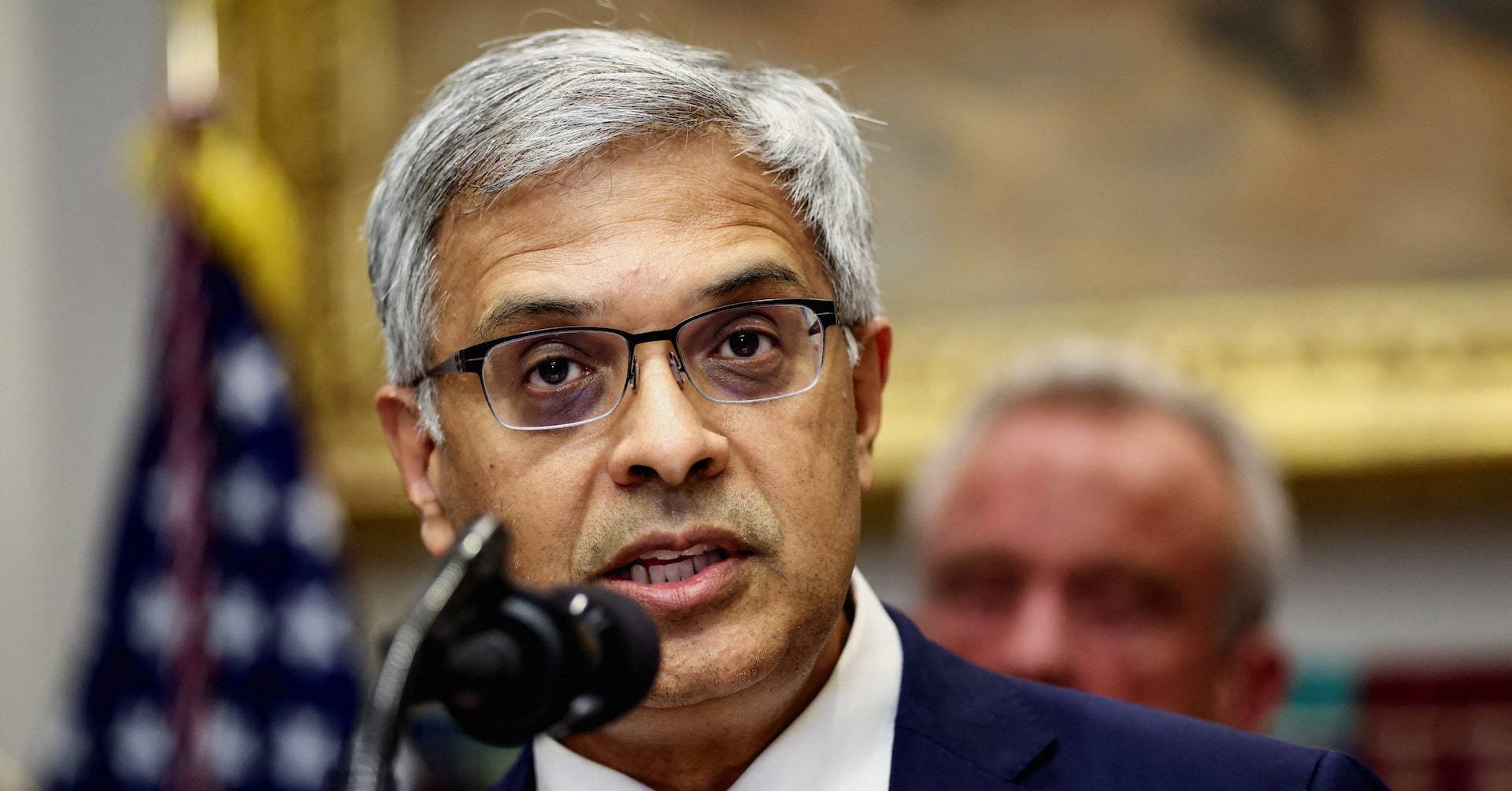
In a significant leadership change, Jay Bhattacharya, the Director of the U.S. National Institutes of Health (NIH), will serve as the acting director of the Centers for Disease Control and Prevention (CDC), according to a Trump administration official. This transition is part of a broader restructuring within the Department of Health and Human Services (HHS) as the midterm elections approach.
Jim O’Neill, the current acting director of the CDC since August, will be stepping down from both his roles within the department. He has been offered a position as the director of the National Science Foundation.
Bhattacharya, a prominent figure in public health and a professor at Stanford University, has been a vocal critic of lockdowns and COVID-19 restrictions. His responsibilities at the NIH include managing a substantial budget of nearly $50 billion that funds numerous scientific research projects, and he will now additionally oversee the CDC’s operations in Atlanta, which include monitoring and responding to public health threats.
Concerns have been raised by health experts regarding the feasibility of Bhattacharya managing both roles effectively. Dan Jernigan, the former director of the CDC’s National Center for Emerging and Zoonotic Infectious Diseases, pointed out the complexities involved in balancing the leadership of two major health agencies located in different cities, stating, “The notion that the current director of the NIH can take on the mantle of another federal agency in his spare time is hard to understand.”
The CDC has faced numerous challenges in recent years, including budget reductions, staff cuts, and controversies linked to HHS Secretary Robert F. Kennedy Jr., a long-standing anti-vaccine proponent. Bhattacharya’s predecessor, Susan Monarez, was dismissed by President Trump in August after opposing vaccine policy changes, leading to resignations from multiple senior officials at the CDC who were concerned about the agency’s direction under Kennedy’s influence.
Under O’Neill’s leadership, the CDC faced additional challenges, including the removal of longstanding vaccine guidance for children and the approval of controversial recommendations resulting from a shake-up of the advisory panel by Kennedy, which included vocal critics of vaccines.
Federal regulations stipulate that Bhattacharya’s tenure as acting CDC director cannot extend beyond late March unless a full-time nominee is submitted to the U.S. Senate. The law requires a nomination within 210 days of Monarez’s dismissal, which occurred last August.
In the wake of these developments, Kennedy has announced additional personnel changes within HHS, with Chris Klomp being promoted to chief counselor to oversee departmental operations. The administration aims to enhance communication strategies with the White House in preparation for the upcoming 2026 midterm elections.
This reshuffle occurs amidst Republican efforts to focus on issues such as healthcare insurance costs and prescription drug affordability as part of their electoral strategy.
