

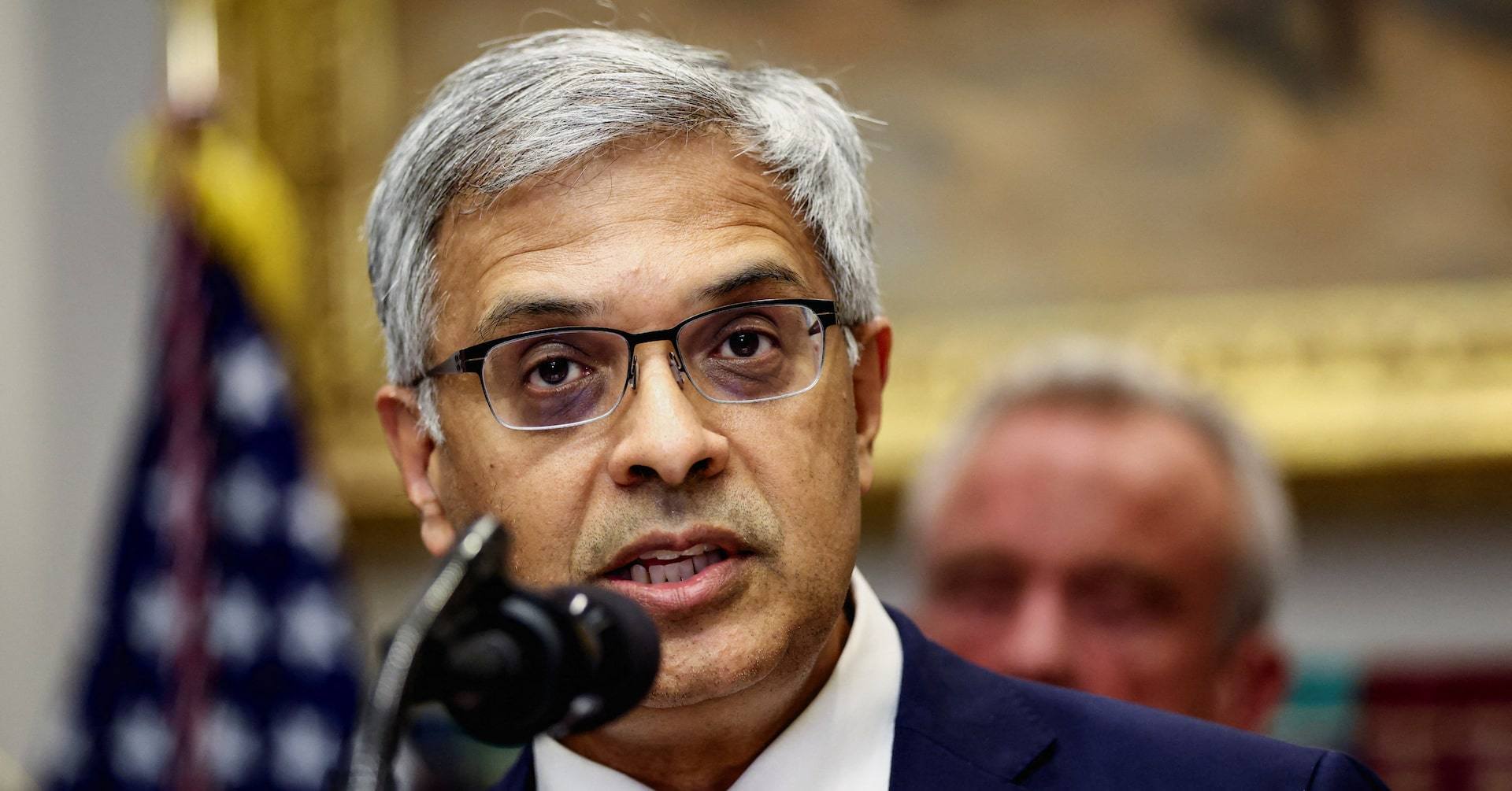
U.S. National Institutes of Health (NIH) Director Jay Bhattacharya has been appointed as the acting director of the Centers for Disease Control and Prevention (CDC), according to an administration official. This appointment is part of a larger reorganization within the health department as the midterm elections approach.
Jim O’Neill, the current Deputy Secretary of Health and Human Services and acting CDC director since August, will step down from both positions. O’Neill will transition to a new role as the director of the National Science Foundation.
Bhattacharya, a professor at Stanford University who has been a vocal critic of lockdown measures and COVID-19 restrictions, will now oversee the Atlanta-based CDC in addition to his responsibilities at the NIH, where he manages a budget of nearly $50 billion and funds numerous scientific projects. The CDC plays a crucial role in tracking and responding to public health threats, with a substantial portion of its budget allocated to state and local health agencies.
Critics have expressed concern over Bhattacharya’s ability to manage both roles effectively. Dan Jernigan, former director of the CDC’s National Center for Emerging and Zoonotic Infectious Diseases, questioned the expectation that the current NIH director could also lead the CDC on a part-time basis. Deb Houry, a former chief medical officer at the CDC, echoed these concerns, warning that this arrangement could endanger the nation’s capacity to respond to health crises.
The CDC has faced considerable turmoil in recent months, including budget reductions and a series of controversies under Secretary of Health and Human Services Robert F. Kennedy Jr., who is known for his anti-vaccine stance. Kennedy’s administration saw the dismissal of CDC Director Susan Monarez after she opposed changes to vaccine policies, which led to the resignations of several senior CDC officials.
During O’Neill’s leadership, the CDC made significant changes to vaccine guidelines, including the removal of longstanding recommendations for childhood vaccinations and a controversial advisory panel recommendation regarding the measles-mumps-rubella-varicella vaccine.
Under federal law, Bhattacharya’s tenure as acting director is limited to late March unless a full-time nominee is submitted to the U.S. Senate. Although the law mandates that a replacement must be nominated within 210 days of Monarez’s dismissal, this period may be extended if a nomination is pending.
In the wake of the leadership shakeup, Kennedy announced additional changes within HHS, aiming to enhance communication between the department and the White House as the 2026 midterm elections draw near. The new roles will reportedly focus on issues related to healthcare insurance costs and accessibility.
