

The numbers are striking. Seventy-five percent of likely voters support requiring photo identification before casting a ballot. That is not a partisan outlier. That is a consensus. Eighty-nine percent of Republicans, sixty percent of Democrats, seventy-seven percent of independents. Across the political spectrum, Americans agree: showing ID to vote is common sense.
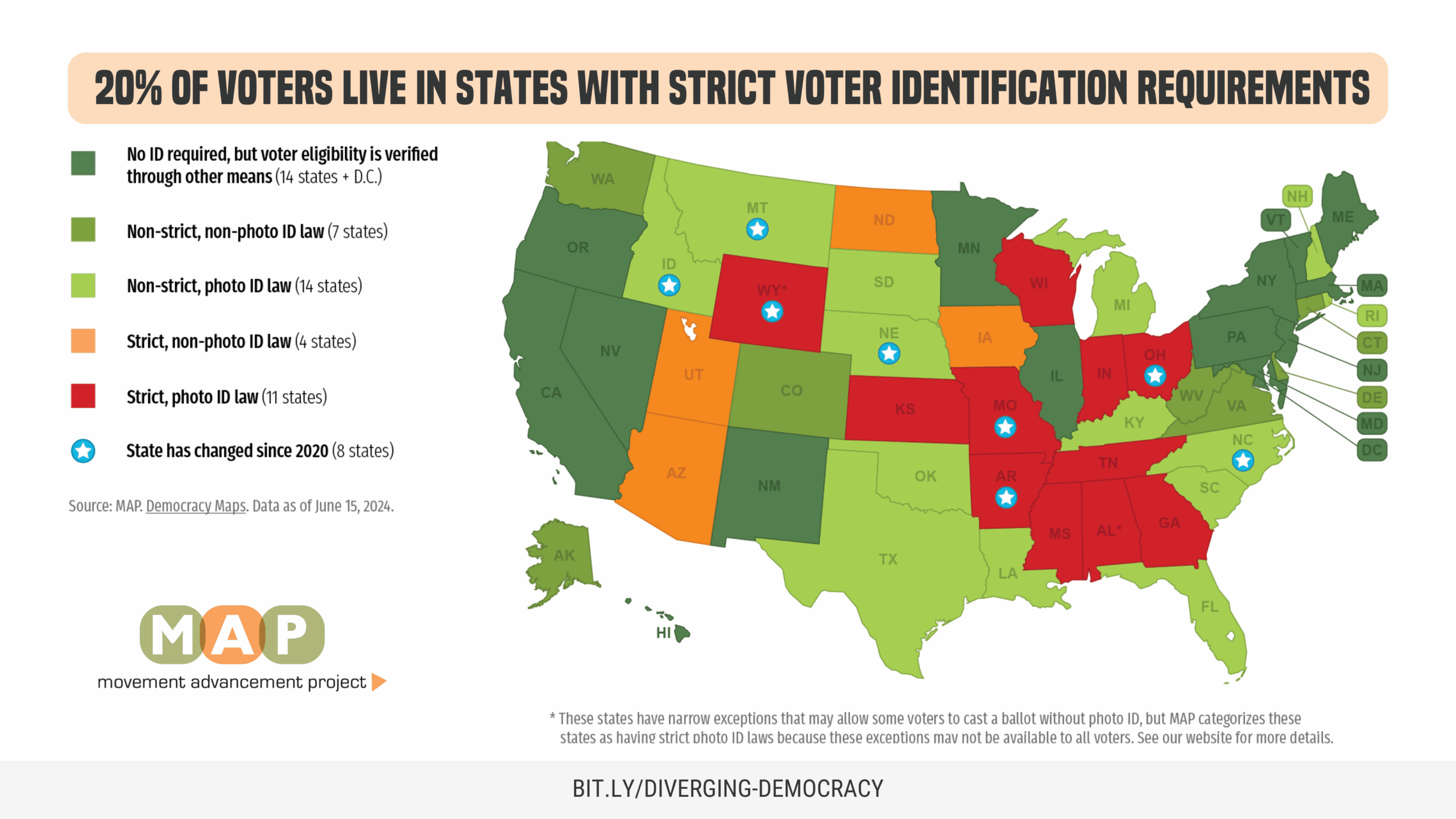
Thirty-six states have enacted some form of voter ID law. They range from strict to lenient, from requiring a photo to accepting alternative documentation. But they all rest on the same principle: that verifying who is voting is a reasonable part of running an election.
Then there is H.R. 1, the For the People Act, passed by the House on a party-line vote. If the Senate approves it, those state laws would be nullified. In their place, a system where anyone can vote simply by signing a form saying they are who they claim to be. No ID required. No verification. Just a signature.
The critics are not wrong to call this radical. It would fundamentally change how elections are conducted in America, overriding the judgment of thirty-six state legislatures and the seventy-five percent of voters who support ID requirements.
The commenter notes that in Virginia, it was not necessary to present identification at a polling place until about twenty years ago. That was a relic of an older time, when most communities were small and poll workers could be expected to recognize citizens at the polling station. Those days are gone. Communities have grown. Populations have shifted. Anonymity is the norm. The old system relied on personal knowledge that no longer exists.
The proposal for national ID cards is worth considering. Many countries have them. They are standard, accepted, unremarkable. The trick would be making them as tamper-proof as possible, ensuring that they serve as a reliable means of identification without becoming an instrument of surveillance or control.
The opposition to voter ID rests on a claim that it suppresses turnout, particularly among minority and low-income voters. The evidence for this is thin. Studies have shown that turnout does not drop significantly in states with ID requirements. The real effect is on confidence in elections. When people know that votes are being cast by verified voters, they trust the results more.
Seventy-five percent is not a fringe position. It is not a partisan talking point. It is the American people speaking clearly about what they want. The question is whether their representatives will listen.
