

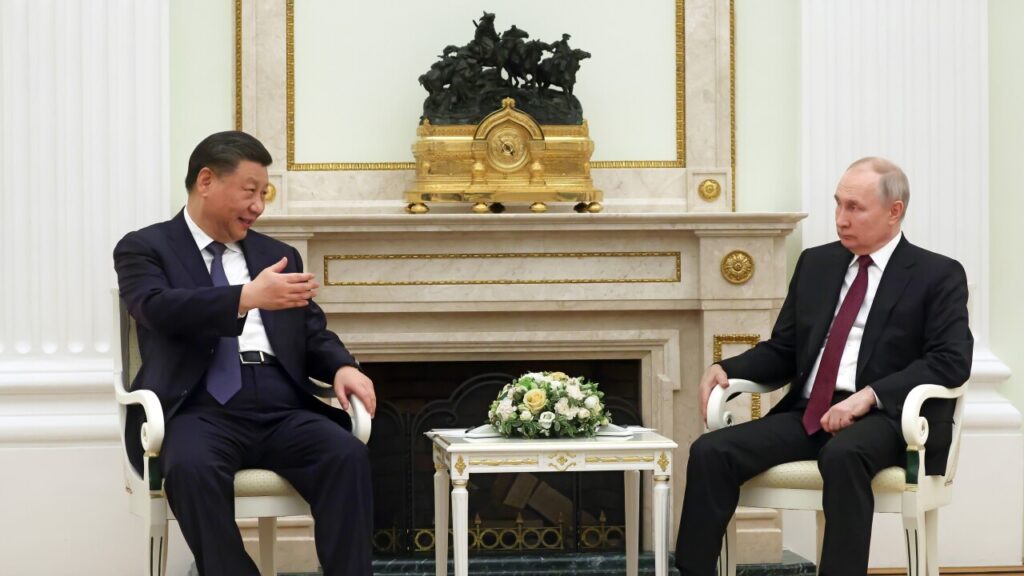
The headlines wrote themselves before the meeting even happened: Xi and Putin together in Moscow, the two great autocrats embracing against the Western world. Another “no limits partnership” photo op. Another chance for the pundit class to warn about the emerging axis of authoritarianism.
Then Xi opened his mouth and said something different.
The Institute for the Study of War caught it. Two articles, published simultaneously on March 19, one in Chinese state media from Putin, one in Russian state media from Xi. Read them together and you see the gap.
Putin’s piece was classic Russian grievance politics. The collective West seeks domination. The United States pursues dual containment against China and Russia. Russia and China are building a partnership to form a multipolar world order—which is Kremlin-speak for a world where America doesn’t call the shots.
Xi’s piece was something else entirely. Yes, he mentioned a multipolar world order. But not against anyone. Not as a weapon. He spent most of his words presenting China as a viable mediator in Ukraine, offering a plan that “reflects the unity of views of the world community.” He talked about negotiations, about peace, about China’s constructive role.
Putin wanted a partner in his war against the West. Xi showed up as something else: a potential mediator, a balancer, a man whose eye is on a far wider goal than helping Russia salvage its disastrous invasion.
This matters. The “no limits partnership” that Russia and China announced before the war always meant different things to each side. For Putin, it was a license to challenge the Western order with Chinese backing. For Xi, it was a hedge—a way to keep Russia close enough to prevent it from falling completely into the Western camp, but not so close that China gets dragged into a losing war.
Now, with Russia’s military exposed as hollow and its economy cratering under sanctions, Xi is showing his hand. He’ll take the economic deals. He’ll sign the trade agreements. He’ll help Russia evade sanctions where it serves Chinese interests. But he’s not going to adopt Putin’s rhetorical war against the West. He’s not going to provide the political cover Russia needs to claim its invasion was justified. And he’s certainly not going to tie his own ambitions to Putin’s sinking ship.
Xi has bigger things in mind. The international order as China sees it is not about destroying the existing system—it’s about reshaping it from within. Expanding trade. Building influence. Creating dependencies. Winning without fighting. That project doesn’t benefit from being yoked to a pariah state bogged down in a bloody stalemate.
So Xi comes to Moscow, smiles for the cameras, signs some deals, and offers to mediate. Putin gets a lifeline, but not the one he wanted. The “no limits” partnership turns out to have very clear limits after all.
China will do what’s best for China. That’s what great powers do. And what’s best for China right now is not hitching its wagon to a losing cause.
